
2026 Naples Flood Map Update: Protecting Your Waterfront Investment Risk Profile
Updated: Jul 21
July 20, 2026 | Real Estate Lifestyle & Buyer Education

Key Takeaways
Collier County’s current effective flood map is still the coastal map adopted on February 8, 2024. The 2026 Physical Map Revision remains preliminary.
Collier County currently projects adoption of the 2026 revisions between August and October 2026, pending appeals or other delays.
A flood-zone change can affect lender insurance requirements, construction standards, renovation planning, and marketability, but it does not automatically determine a property’s insurance premium or value.
Waterfront buyers should evaluate the structure’s elevation, Base Flood Elevation, first-floor elevation, flood-loss history, insurance options, seawall condition, and renovation exposure before making an offer.
Existing owners should obtain current documentation and insurance quotes before the new map becomes effective, not after a renewal or transaction creates an expensive surprise.
Are New Naples Flood Maps Effective Today?
No. That is the most important fact to establish before discussing the 2026 flood-map changes.
As of July 20, 2026, the current effective Collier County Flood Insurance Rate Map is the coastal map adopted on February 8, 2024. Collier County describes the 2026 Physical Map Revision, commonly called the PMR, as a future update projected for adoption between August and October 2026. The timing remains subject to the federal review and appeal process.
That does not mean waterfront owners should wait. Preliminary maps are useful for due diligence because they show where flood zones or Base Flood Elevations may change. Buyers, sellers, lenders, insurers, surveyors, architects, and contractors can use that information now to anticipate future requirements.
The right headline is preparation, not panic. The revisions may materially affect individual properties, but there is no verified basis for saying every Naples waterfront property will lose value overnight.
What the 2026 Collier County Revision Covers
Collier County says the future map revision incorporates updated LiDAR elevation information into portions of the county that were not finalized using the newer data during the earlier mapping process.
The county divides the work into two Physical Map Revisions. The mapped study areas include the Cocohatchee basins, District 6, Henderson Creek, Ave Maria, Faka Union and Fakahatchee related basins, and the Southern Coastal basin.
Property owners can compare the current effective map with FEMA’s preliminary National Flood Hazard Layer using the county’s Changes Since Last Flood Insurance Rate Map tool.
A map comparison is an excellent screening step, but it is not a substitute for a property-specific review by a licensed surveyor, insurance professional, lender, or floodplain official.
Flood Zone, Elevation, and Insurance Are Different Questions
One of the most common mistakes in waterfront due diligence is treating the flood-zone letter as the entire risk profile.
The effective FEMA map is important because lenders use it to determine whether a building is located in a Special Flood Hazard Area. Properties in A or V zones with certain federally backed financing are generally subject to mandatory flood-insurance requirements.
Insurance pricing is more individualized. Under FEMA’s Risk Rating 2.0 methodology, the flood zone and the building’s elevation relative to the Base Flood Elevation are not the only pricing factors. The structure’s location, replacement cost, flood frequency, distance from water, foundation type, number of floors, and other characteristics may affect the premium.
This is why two waterfront homes on the same street can produce very different quotes. A newer elevated residence and an older ground-level home may share a map designation while presenting entirely different underwriting and renovation risks.
What Happened to Grandfathered Flood Rates?
There was no verified expiration of grandfathered status for Port Royal or Aqualane Shores properties on July 20, 2026.
FEMA explains that policies formerly eligible for grandfathered rating treatment are transitioning toward full-risk premiums under Risk Rating 2.0. Increases are generally phased in subject to statutory annual limits, rather than appearing as a single overnight reset.
Properties newly mapped into a Special Flood Hazard Area may qualify for FEMA’s Newly Mapped discount when the eligibility requirements are met. Continuous coverage and the timing of policy placement can matter. Owners should obtain advice from a qualified flood-insurance agent before changing or allowing coverage to lapse.
How Flood-Map Changes Can Affect Waterfront Value
Flood maps do not independently set market value. They influence several factors that buyers use to determine value.
Carrying cost: Higher insurance costs can reduce a buyer’s affordable purchase price or increase the return required by an investor.
Financing: A lender may require flood insurance, additional documentation, or coverage limits that must be satisfied before closing.
Renovation flexibility: A proposed renovation can trigger floodplain compliance requirements, particularly when the work reaches the substantial-improvement threshold.
Replacement exposure: Older ground-level structures can carry more uncertainty if they are severely damaged or substantially improved.
Marketability: A well-documented elevated home with a favorable claims history and insurable construction may attract a broader pool of buyers.
Transaction timing: Missing elevation certificates, late insurance quotes, unresolved permit history, or unclear flood disclosures can delay underwriting and closing.
The investment opportunity lies in separating actual property-specific risk from generalized fear. A waterfront address should not be discounted simply because it is near water, and it should not command a premium merely because the current map appears favorable.
The Waterfront Risk Profile Buyers Should Build
Before committing fresh capital to a Naples waterfront property, assemble a concise risk file for the specific structure, not just the parcel.
Confirm the current effective FEMA flood zone and review the preliminary 2026 mapping.
Obtain or update the Elevation Certificate and verify the lowest-floor and machinery elevations.
Compare the structure’s elevation with the applicable Base Flood Elevation.
Request flood-insurance quotes based on the exact building, coverage, deductible, occupancy, and claims information.
Review the seller’s Florida flood disclosure and investigate known flooding, insurance claims, and federal assistance.
Inspect the seawall, cap, tiebacks, dock, drainage, grading, flood vents, and below-floor enclosures.
Check permit history and determine whether prior improvements affect future substantial-improvement calculations.
Have a contractor or architect price likely resilience upgrades before finalizing the acquisition analysis.
For luxury properties, also compare the NFIP limits with private-market coverage. NFIP building coverage for a single-family residence is generally limited to $250,000, which may be only a small portion of the replacement exposure on a Naples waterfront estate. This is a coverage limit, not evidence that the NFIP has run out of capacity.
Mitigation Options for Existing Naples Homes
Mitigation should be tailored to the structure and permitted correctly. Depending on the home, practical measures may include elevating mechanical and electrical equipment, improving flood openings where permitted, protecting utilities, correcting drainage, reinforcing or replacing seawalls, using flood-resistant materials in appropriate areas, and elevating the building during a major reconstruction.
Flood panels require particular care. The City of Naples treats their use on residential buildings as voluntary mitigation, not an automatic path to code compliance. The installation must preserve required egress, account for flood loads, avoid creating a new nonconformity, remain below the substantial-improvement threshold when applicable, and be permitted.
Residential dry floodproofing also has important limitations. The City states that NFIP dry-floodproofing treatment below Base Flood Elevation is not permitted as a substitute for elevation in residential buildings. Owners should obtain property-specific guidance before purchasing a system based on marketing claims.
The 50% Rule Can Be the Real Investment Issue
For many older waterfront homes, the most consequential number is not the flood-zone letter. It is the relationship between the proposed improvement cost and the building’s recognized value.
The City of Naples defines substantial improvement as reconstruction, rehabilitation, an addition, or another improvement whose cost equals or exceeds 50 percent of the structure’s market value before work begins. If a building is substantially improved or substantially damaged, it must be brought into compliance with applicable flood-damage prevention requirements, which can include elevation to or above the required flood elevation.
Land, pools, and certain non-building components are not treated as part of the structure’s value for this analysis. Buyers considering a major renovation should confirm the City’s valuation method and obtain a realistic, complete construction estimate before assuming an older home can be remodeled as planned.
Insurance and Contract Due Diligence for 2026
Florida law requires a residential seller to provide the statutory flood disclosure at or before the sales contract is executed. The disclosure addresses known flood damage during the seller’s ownership, flood-related insurance claims, and federal assistance.
Florida law does not require every 2026 sales contract to contain a newly mandated force majeure clause. Contract language should be selected for the transaction and reviewed by a qualified Florida real estate attorney when legal interpretation is needed.
A prudent waterfront contract and due-diligence plan may address the buyer’s ability to investigate flood zone, elevation, insurance availability and cost, permits, seawall condition, financing, and repair or renovation feasibility. The exact protection depends on the contract form and negotiated terms.
A Practical Strategy Before the 2026 Map Becomes Effective
Run the property through both the current Collier County map and FEMA’s preliminary comparison tool.
Order an updated Elevation Certificate when the available certificate is missing, outdated, or inconsistent with the current structure.
Request both NFIP and private flood-insurance options, including meaningful excess coverage for a high-value residence.
Evaluate the home under the City of Naples 50 percent rule before committing to a major renovation.
Price physical resilience work separately from cosmetic remodeling.
Treat flood documentation as part of the property’s resale package, just like surveys, permits, roof records, and mechanical-system documentation.
For sellers, good documentation can reduce uncertainty and help qualified buyers evaluate the property on facts. For buyers, the same documentation can prevent an emotional waterfront purchase from becoming an avoidable capital problem.
The Bottom Line
The 2026 Collier County flood-map revision is an important planning event, but it is not a verified overnight crisis. The current map remains the 2024 map, and the future revision is projected for adoption later in 2026.
The strongest Naples waterfront investments will be the properties that combine an irreplaceable location with verifiable elevation, insurable construction, manageable renovation exposure, resilient infrastructure, and complete documentation.
Waterfront scarcity still matters. So does the building sitting on the land.
Helpful Resources and Related Guides
Related Guides
Naples Build vs. Renovate in 2026: Luxury Market Insights for Buyers — Compare the costs, benefits, permitting, and long-term value of building new versus renovating in Naples.
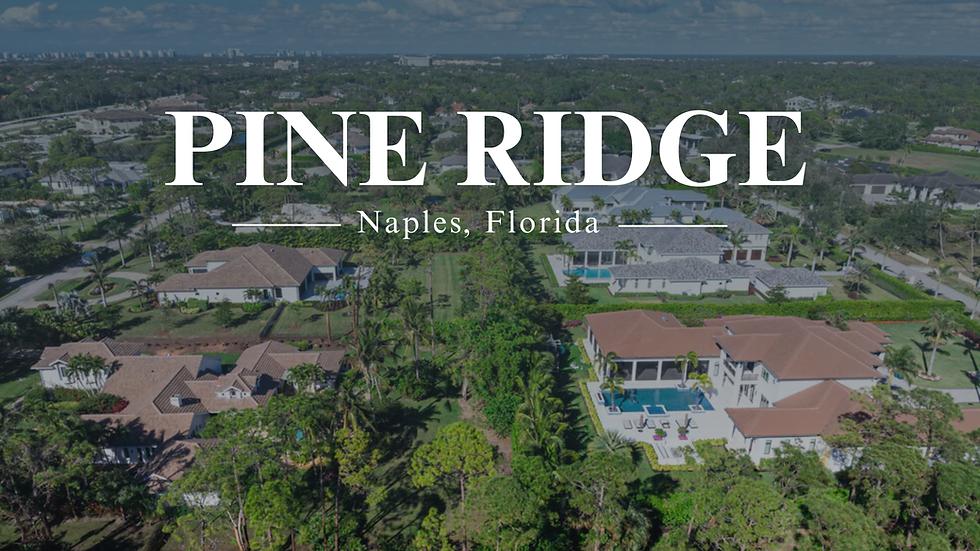
Pine Ridge Naples Real Estate: Acreage, Privacy, and Smart Due Diligence — Explore one of Naples' premier luxury neighborhoods and learn what buyers should evaluate before purchasing.
Need a Property-Specific Waterfront Risk Review?
If you are buying, selling, renovating, or rebuilding a Naples waterfront property, the right decision begins with the structure, elevation, insurance position, and long-term plan. I can help you evaluate the real estate and construction issues together before you commit.



Comments